If you’re thinking about introducing your toddler to biking, starting with a balance bike is one of the easiest and most effective ways to do it.
Balance bikes allow toddlers to learn the most important skill first: balance. They do this in a way that feels natural, playful, and pressure-free. This guide walks you through what to expect, how learning unfolds, and how balance biking sets kids up for a smooth transition to pedaling later.
What is a balance bike?
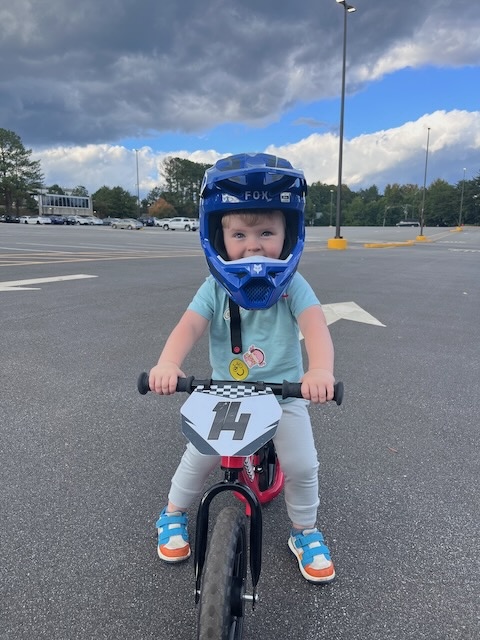
A balance bike is a small bike without pedals. Instead of pedaling, children use their feet to move forward, slow down, and stop.
By removing pedals, toddlers can focus on staying upright, steering and turning, building confidence, and moving independently. This makes balance bikes an ideal first bike for kids ages 2–5.
Why balance bikes work so well for toddlers
Toddlers are still developing coordination, strength, and body awareness. Balance bikes meet them right where they are.
They allow kids to keep their feet close to the ground, recover easily from small wobbles, learn at their own pace, and build confidence without fear of falling. Because toddlers are always in control, learning feels like play rather than practice.
Choosing the right balance bike
Fit matters more than brand.
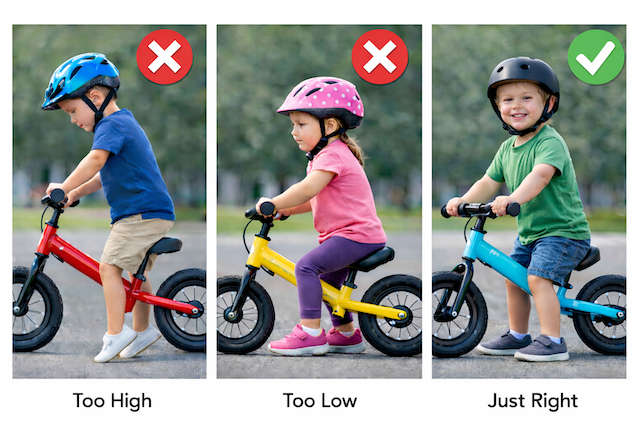
Look for a bike where your child can sit with both feet flat on the ground, knees slightly bent, and the bike feels light and manageable. A well-fitted bike makes learning faster and far more enjoyable.
Where to start riding
Where to start riding
Begin on flat, open surfaces where toddlers can focus on balance, such as smooth pavement, playground loops, or empty parking lots. Avoid steep hills or busy areas at first. Gentle slopes can be introduced later once kids are confident.
In Brookhaven, we are lucky to have several great beginner-friendly options. Murphey Candler Park II (the new section) has a lovely paved loop, and families also enjoy the paths at Blackburn Park, Skyland Park, and Georgian Hills Park. These spaces give toddlers room to practice while parents can easily stay close.
How toddlers ages 2–5 learn to ride a balance bike
Balance biking is a gradual process. Every stage builds comfort, coordination, and confidence, and none should be rushed.
Stage 1 Standing over the frame and walking
Most toddlers begin by standing over the bike frame with both feet on the ground, without putting their weight on the seat. The bike sits between their legs, hands rest on the handlebars, and feet fully support their weight. Sitting often feels unnecessary or unfamiliar at this point.
This stage helps toddlers get comfortable with the bike’s size and movement, learn how steering works, and feel safe and in control. Resisting sitting at this stage should be respected.
Younger riders often stay in the walking phase longer while they get used to how the bike feels.
How you can help: Let your child set the pace. If they want to walk the bike for days, weeks or even months, that is part of learning. Do not assume they will not take to a balance bike later or that you should skip ahead to training wheels. Confidence grows when children feel in control.
I often meet families who come to lessons with older kids and tell me their child “didn’t take to” the balance bike, so they moved on. Many times, they were likely closer than it appeared and simply needed a bit more time.
Stage 2 Sitting and walking
As confidence grows, children begin to sit on the saddle while moving forward with their feet. They are coordinating steering, pushing, and staying upright all at once. Some riders stay in this phase for a while, especially younger or more cautious children, and that is completely normal.
Riding around other kids can make a big difference here. Seeing friends glide and move faster often sparks curiosity and motivation. Many children naturally start to take bigger steps or quick little runs simply because they want to join the fun.
Stage 3 Scooting
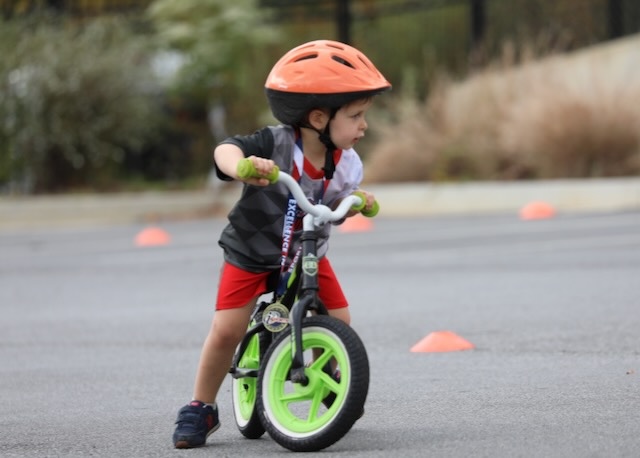
Next comes scooting. Toddlers push off with one or both feet while seated. You may notice short bursts of movement, one foot lifting briefly, and growing curiosity about speed and balance. Scooting is a key transition phase where toddlers begin to trust the bike.
Stage 4 Gliding
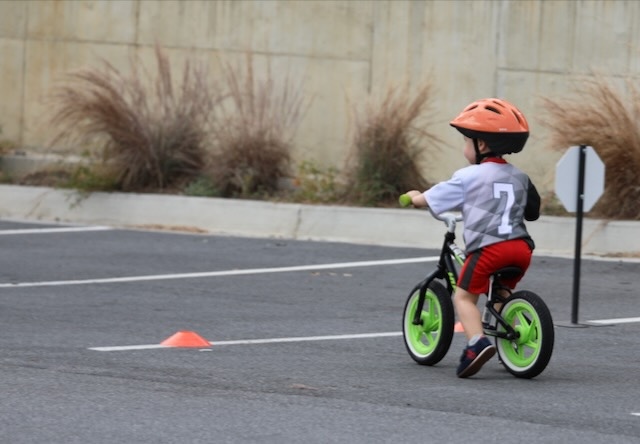
Eventually, toddlers lift both feet for short glides. At first, glides are brief and feet come down quickly. Over time, gliding becomes more frequent and controlled. For toddlers, short glides are exactly what they need to build strong foundational balance.
Keep it playful
Toddlers learn best when riding feels fun.
Short sessions work better than long practice. Games like follow-the-leader or gliding to a cone help keep kids engaged. Encouragement matters far more than instruction. If your child is smiling, they are learning.
Why riding with other kids helps so much
Toddlers learn incredibly well by watching their peers.
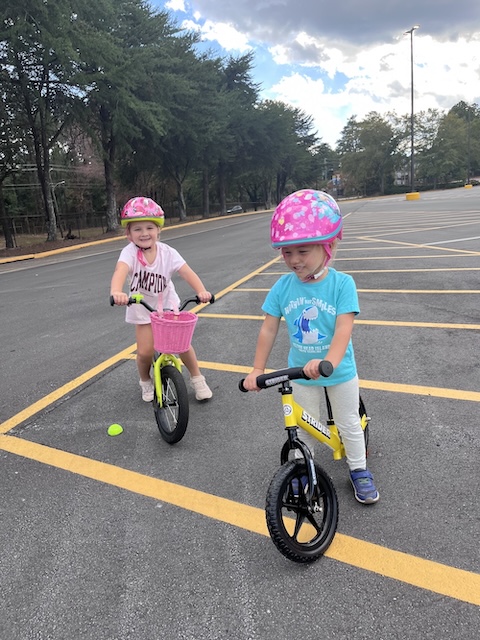
Riding alongside other kids helps confidence build faster, skills develop through imitation, and motivation stay high. This is one of the reasons group balance bike play sessions are so effective at this age.
Tiny Wheel Time a playful start on two wheels
Tiny Wheel Time classes are designed specifically for toddlers and preschoolers who are just starting out.
These play-based sessions focus on balance-first riding, movement and coordination, learning through games, and riding alongside other kids. There is no pressure, no pedals, and no expectations, just a positive first experience on two wheels.
Tiny Wheel Time sessions are offered this March at Lynwood Recreation Center in Brookhaven Georgia just inside the Atlanta Perimeter.
What comes next and what to avoid
Many kids move from a balance bike to a pedal bike with training wheels, but this step is best avoided. Training wheels remove the need to balance and keep the bike upright for the child, which can undo balance skills already learned.
When a child is ready for a bigger bike, a better transition is to move to a regular pedal bike, remove the pedals, lower the seat so feet reach the ground, and let the child ride it just like a balance bike. Once the child is confidently gliding again, the pedals can be added back on without using training wheels.
Choosing a first pedal bike
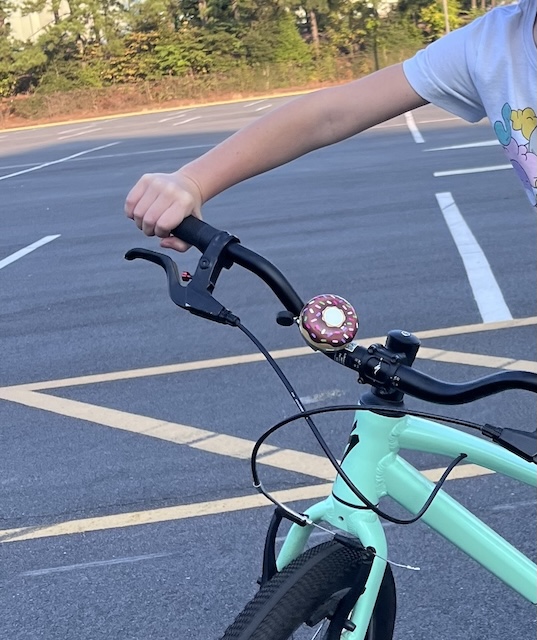
When buying your child’s first pedal bike, choosing hand brakes instead of coaster brakes is highly recommended. Hand brakes allow a child to slow down and stop even when their feet come off the pedals or when the pedals are temporarily removed to focus on learning balance. This strongly supports a balance-first approach.
Coaster brakes (back-pedal brakes) can make learning harder. As kids figure out pedaling, it’s completely natural for them to move the pedals forward and backward. On a coaster-brake bike, any accidental backward motion suddenly stops the bike. That means they lose momentum, have to restart, and can quickly become frustrated.
From about age 3 and up, most children have the coordination to use hand brakes comfortably. It’s also the braking method they’ll use as they grow, making it the safest and most intuitive choice long term.
Is my 5-year-old too old for a balance bike?
Not at all.
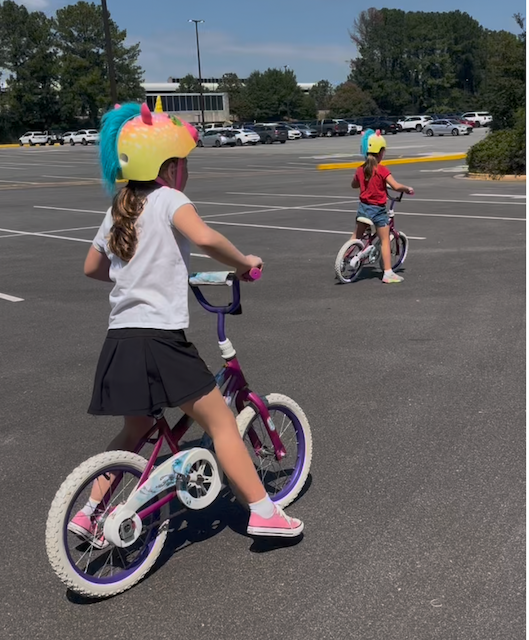
If your child is older and hasn’t learned yet, starting with balance either on a balance bike or on a pedal bike with the pedals removed is still the simplest and least stressful path to riding.
The takeaway for parents
For toddlers, balance bikes are the best place to start. They build confidence, coordination, and real riding skills, making it easier to skip training wheels later and move smoothly toward pedaling.
If you would like a supportive, playful way to get started, Tiny Wheel Time in Brookhaven Georgia offers toddlers a fun, social introduction to biking.
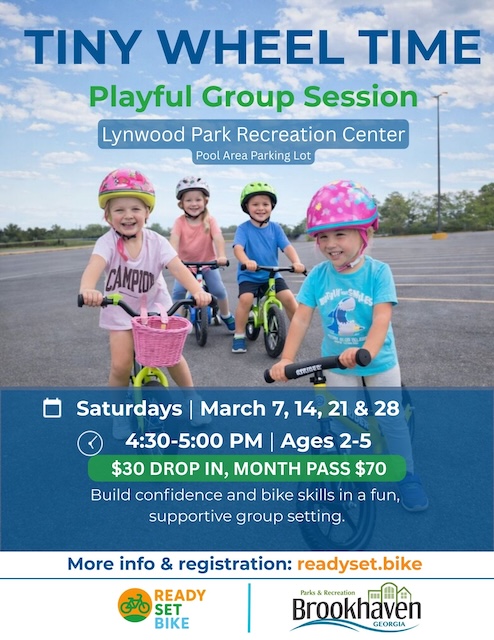
Learn more and sign up for Tiny Wheel Time at Lynwood Recreation Center.